
Kiwi Rider Podcast 2022 | E28
In this week's show, Ray talked us through his insurance win, we have

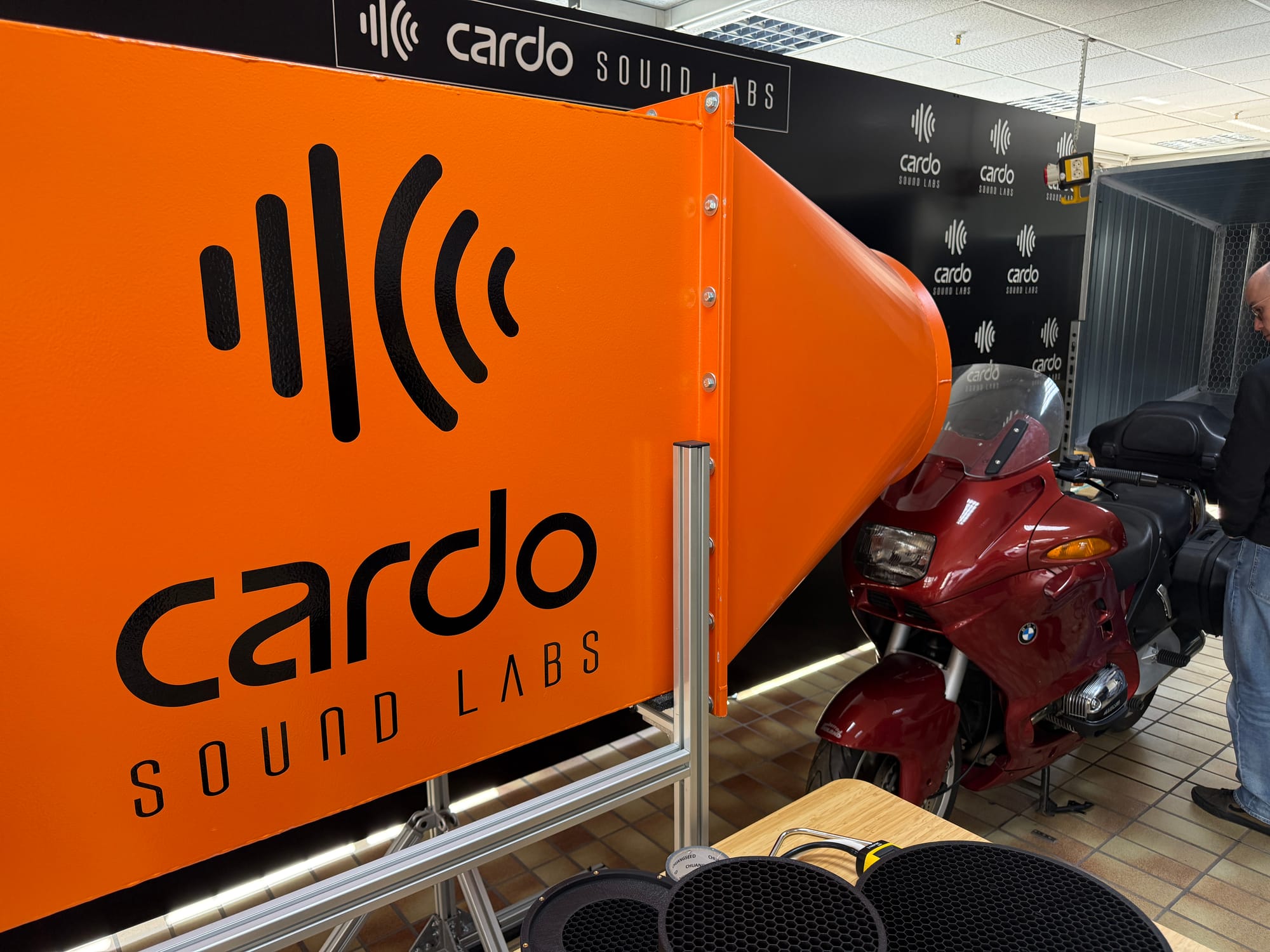
When it comes to Intercoms and Bluetooth audio devices mounted on your helmet, you probably fall into one of two camps, either you have an intercom and love it, or you don’t have an intercom and would never try one. However youn feel about the current offerings in the market, we are on the edge of a big and reasonably important change. ANC (Active noise cancellation) is making it’s way into Motorcycle helmets. Cardo Systems has been a major player in the world of motorcycle intercoms and Bluetooth devices for some time now. Recently I had the opportunity to visit their R&D facility in Straubing Germany and try out a preproduction Cardo Beyond GTS helmet with the ANC system installed. More about that later in this story, but first, to understand why this is a significant model, let me give you a timeline of the company’s previous releases.
Time line:
In the early 2000’s Cardo released the Scarla Rider line of Bluetooth communicators, these had their drawbacks, but for the time it was pretty incredible technology. In the early to mid-20-teens Cardo rebranded the Packtalk units to Cardo Packtalk, ditching the Scarla brand entirely. The flagship device being the Packtalk Bold. This device included a couple of Bluetooth intercom channels, a channel for your phone, the first generation of DMC (Dynamic Mesh Connection) most people know this sort of system as “Mesh”, and a simply (by today’s standards) noise gate on the microphone, curing out road nose when the rider is not speaking. The game changer here is DMC, where previously, to have more than 2 riders linked together you had to pair each device to the next in a sort of daisy chain. The riders would then need to stay within range of each other, meaning they needed to ride in that order and reasonably close to maintain connection. Talk about an absolute pain in the ass. The reason DMC was such a game changer is it automatically adjusts the order to maximise range while keeping all riders linked together. And if a rider drops out, when they come back into range they are automatically re-added to the group.
In 2018 Cardo released the Cardo Packtalk Edge, which was a generational update to the Packtalk Bold. This included Bluetooth 5.0 which increased the quality, range and number of riders able to join one DMC 2.0 group. 2x Bluetooth Intercom channels also got a quality boost, going from sounding like calling someone up on a truckies RT, to the quality you might expect from a Zoom of FaceTime call. Also included in this generation was 2 Bluetooth device channels, one for your phone and the other for the likes of a radar detector or the like. Other functionality included in this upgrade included DMX/Bluetooth Bridge, allowing a rider to link someone using an off-brand intercom into the pre-established DMC group Drawbacks of this system are similar to the original Bluetooth connection, where the off-brand intercom user needed to stay near their bridged user to maintain connection. Battery life for the user who was acting as the bridge was also expected to take a hit.
Not too long after the Backtalk Edge, Cardo released the Packtalk Neo, which has all the functionality of the Edge, but at a lower price point, changing the helmet mount and connection system. They also released the Packtalk Custom for a short time, removing from the line up after consumers misunderstood the extend behind the product and saw it as an introductory subscription model.
Up til now I have only spoken about the flagship products from Cardo, but as with all technology, features etc filter down, and Cardo has over time released and updated their lower end products such as the Freecom +, Freexom X2 and X4, and the entry level offering the Spirit and Spirit HD.
We are now in a world where motorcycling, which many generally older riders will say should be a solitary experience, is more connected than ever. When I started riding back in the early 2000’s I used to get so bored. I started experimenting with wired headphones under my helmet, which was an absolute pain. Some people have tried using the likes of AirPods and wireless headphones with mixed results. But as soon as I installed my first Cardo device in my helmet, it was a total game changer, and I now actively choose not to ride without a system installed on my helmet. It allows for music and podcasts, turn by turn navigation, rider connection and phone calls. And with the introduction of voice commands, and virtual assistant integration, you often don’t need to stop riding to achieve something like a route change, or answer a call, or eve sent a test message.
Another use case I will touch on here, is the ability for real time communication and coaching when teaching young or inexperienced riders. My Son started riding at age 4, on an electric motorcycle, around the local park, and it was brilliant being able to talk to him in real time, with a Packtalk Neo installed on his helmet, and me wearing a set of Edge phones, which are essentially a set of PPE earmuffs, with a Packtalk Edge installed on the side. Giving the wearer all the functionality of the Packtalk Edge installed on a helmet.
Does this mean then, we have reached peak intercom?
Is there anything else they could cram into a 20mmx10mm box, stuck to the sidie of my helmet?
Packtalk Pro was released in 2025, maintaining the same form factor of the Packtalk Edge, but introducing auto on/off features and crash detection.
But there’s still one big thing that we haven’t cracked… how do we minimize the audible impact of wind hitting the riders helmet?
Depending on what helmet you have, how well the Cardo is installed and what bikes you ride, your experiences with a Cardo product may be better or worse than intended. But one thing most riders can’t avoid is the sound of wind hitting their helmet. And generally the more turbulent that wind is, the worse it sounds.
The Bell Qualifier I have is the most noisy helmet I have ever experienced. And its even more obvious when the Cardo device is on the side of the helmet. Wind noise due to turbulence is a real thing. So could we incorporate some of the same technology that makes the likes of Apple AirPods so good, in to a Cardo device?
I mentioned the size issue earlier, given that up till now we only have a small footprint on the side of the helmet to fit anything into, but if Cardo were to make the helmet from scratch, they could then utilize any/all dead space traditional helmet manufacturers otherwise don’t use and install noise cancelling mics, batteries and other things, giving the outside of the helmet a complete seamless design and minimize air turbulence and noise.
Of course, they would need to know how to make a helmet, and ensure that any such product wasn’t just a bargain basement lid with some high tech electronics. They would need to confirm to ECE, DOT and any other respected standards. They would need to retain any features the public can already get from the likes or Aria, Airoh, HJC and the likes. There would need to be a reason to buy the helmet, and a price point to make it achievable… and hopefully not just ride the “cool factor” of the likes of Ruroc.
Unless you having been living under a rock, you will of course know that Cardo have announced and shown off early prototypes of the Beyond GT and Beyond GTS helmets. Im not sure if they’re calling them “Smart helmets” because this gives the impression of AI built in, Heads up display on the inside of the visor and a whole lot more, these features (to the best of my knowledge) don’t in fact exist, at least not in the main stream. Cardo flew me to Straubing, Germany to show me around their purpose built R and D facility Cardo Sound Labs, and while there, they went into quite a bit of detail on exactly what they have come up with, how they did it and what’s next for this ground breaking company.